Aligning Teams for Operational Excellence
In complex engineering environments, alignment isn’t a luxury — it’s a strategic requirement. When teams operate across multiple projects within a matrix organization, clarity, shared structures, and a common approach become essential for reducing inefficiencies and enabling consistent execution.
Key Points
- A shared vision prevents repetitive work and reduces inefficiencies.
- Alignment across projects accelerates onboarding and improves productivity.
- Templates and playbooks create clarity and free cognitive space for higher-value work.
- Cross-functional processes strengthen collaboration and streamline workflows.
- Leadership means creating systems that support consistent ways of working.
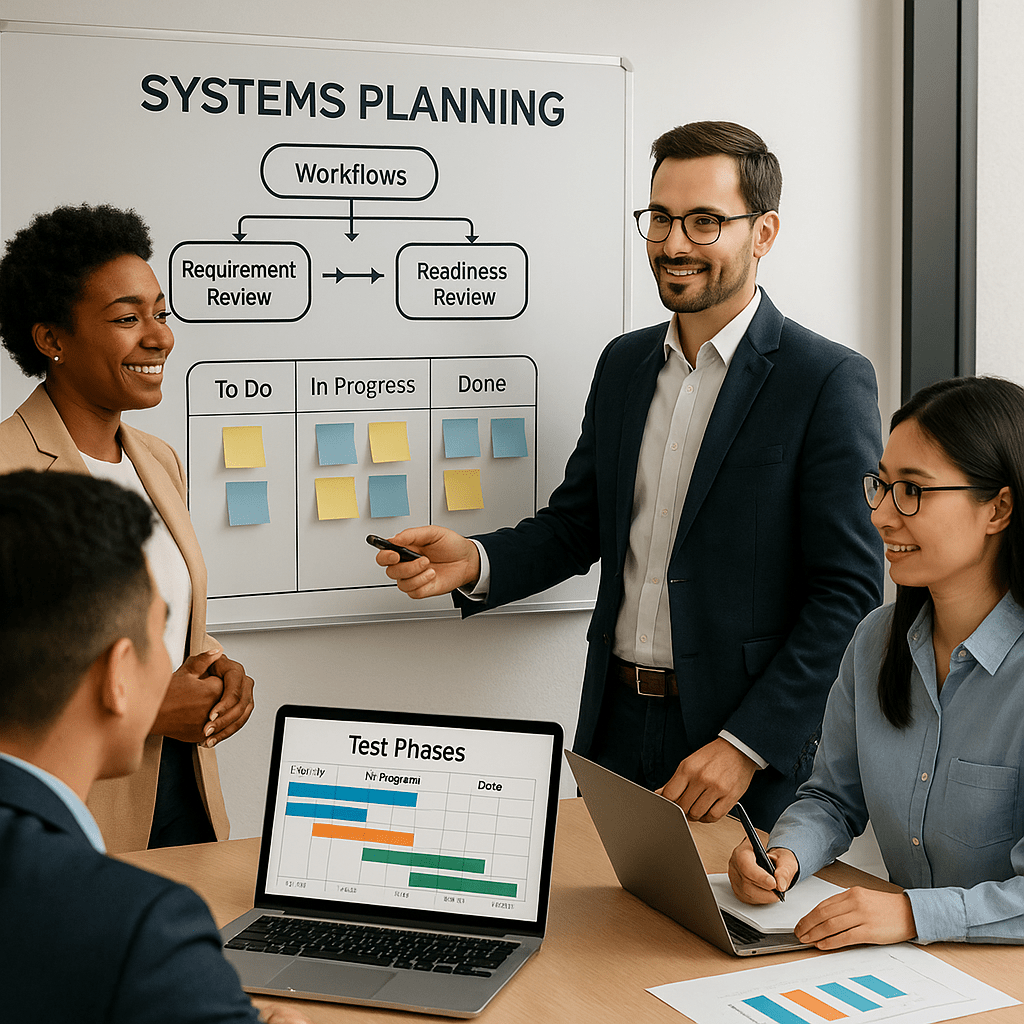
Recognizing Patterns for Strategic Alignment
Across my career in AIT environments, I’ve repeatedly seen a similar pattern: teams often reinvent the wheel from project to project. In a matrix organization — where one engineer may support a major project while another splits time across several smaller ones — this leads to duplicated effort, unclear responsibilities, and misaligned expectations.
This recognition guided my focus as a team lead. With six major projects and several smaller initiatives running in parallel, I began identifying recurring needs across teams and translating these insights into shared structures. The goal was simple: ensure that every project benefits from lessons learned, not just the one where the lesson originated.
The Power of Templates and Playbooks
One of the most effective levers for alignment has been establishing a library of templates and playbooks for readiness reviews, upcoming test campaigns, procedure tracking, and more. This system reduced unnecessary questions, ensured consistency across teams, and clarified responsibilities early.
Knowing where to find a template, how to prepare, and who owns each piece of the process significantly reduced friction. Engineers no longer needed to rebuild documents or interpret expectations from scratch — the foundation was already there.
With structured guidance in place, teams can redirect their time and energy toward problem-solving, system-level thinking, and innovation rather than administrative reconstruction.
Cutting Meeting Overhead to Increase Focus
Alignment also means respecting people’s time. Early on, our weekly, daily, and cross-functional syncs consumed too many hours without delivering equivalent value. By introducing clear agendas, shared preparation, clarified responsibilities, and consolidated information spaces, we reduced meeting overhead by about three hours per week.
The outcome was immediate:
- improved team satisfaction,
- sharper focus,
- and more effective collaboration across disciplines.
Operational alignment is often less about adding new processes and more about removing unnecessary ones.
Steps to Foster a Shared Vision
- Identify common goals and articulate a clear, team-wide vision.
- Engage colleagues early to incorporate perspectives across projects and disciplines.
- Build and maintain a shared library of templates and playbooks that evolve with lessons learned.
These steps ensure not only alignment, but also empowerment — giving people clarity and the space to contribute effectively.
Building a Culture of Continuous Improvement
Alignment is not a one-time exercise. It’s a continuous process of observing patterns, refining practices, and adapting structures based on real project experience. With each campaign and readiness review, we improve documentation, strengthen preparation, and make our workflows more efficient across the whole department.
By embracing a mindset of continuous improvement, teams become more agile, more resilient, and better equipped to handle the demands of a matrix organization.
Reflecting on Leadership Practices
Ask yourself:
- What structures help your team stay aligned across projects?
- How can you capture lessons learned and translate them into shared practices?
- Where can clarity reduce overhead and free up time for meaningful engineering work?
Alignment is one of the most powerful tools leaders have. By building shared vision and consistent structures, we enhance operational efficiency, reduce friction, and create an environment where teams can thrive.
 Engineer Your Life