Explore how emotional triggers lead to automatic responses and how understanding them can enhance self-awareness and emotional regulation.
Summary: Emotional triggers can provoke intense reactions rooted in past experiences or beliefs. This article explains what emotional triggers are, how they manifest through automatic responses, and provides strategies to identify and understand personal triggers. Recognizing these patterns empowers individuals to break unhealthy cycles and use emotional triggers as opportunities for growth.
Key Points
- What are Emotional Triggers? Triggers are events or situations that provoke strong emotional reactions, often tied to past experiences.
- Recognizing Emotional Responses: Triggers activate automatic reactions, such as fight, flight, freeze, or appease.
- How to Identify Personal Triggers and Patterns: Journaling, reflecting, and noticing physical sensations can help pinpoint emotional triggers.
- The Growth Opportunity in Triggers: Triggers highlight areas for growth, providing a path toward self-improvement and emotional resilience.
- Conclusion: Understanding triggers helps you control emotional responses and paves the way for better communication and self-awareness.
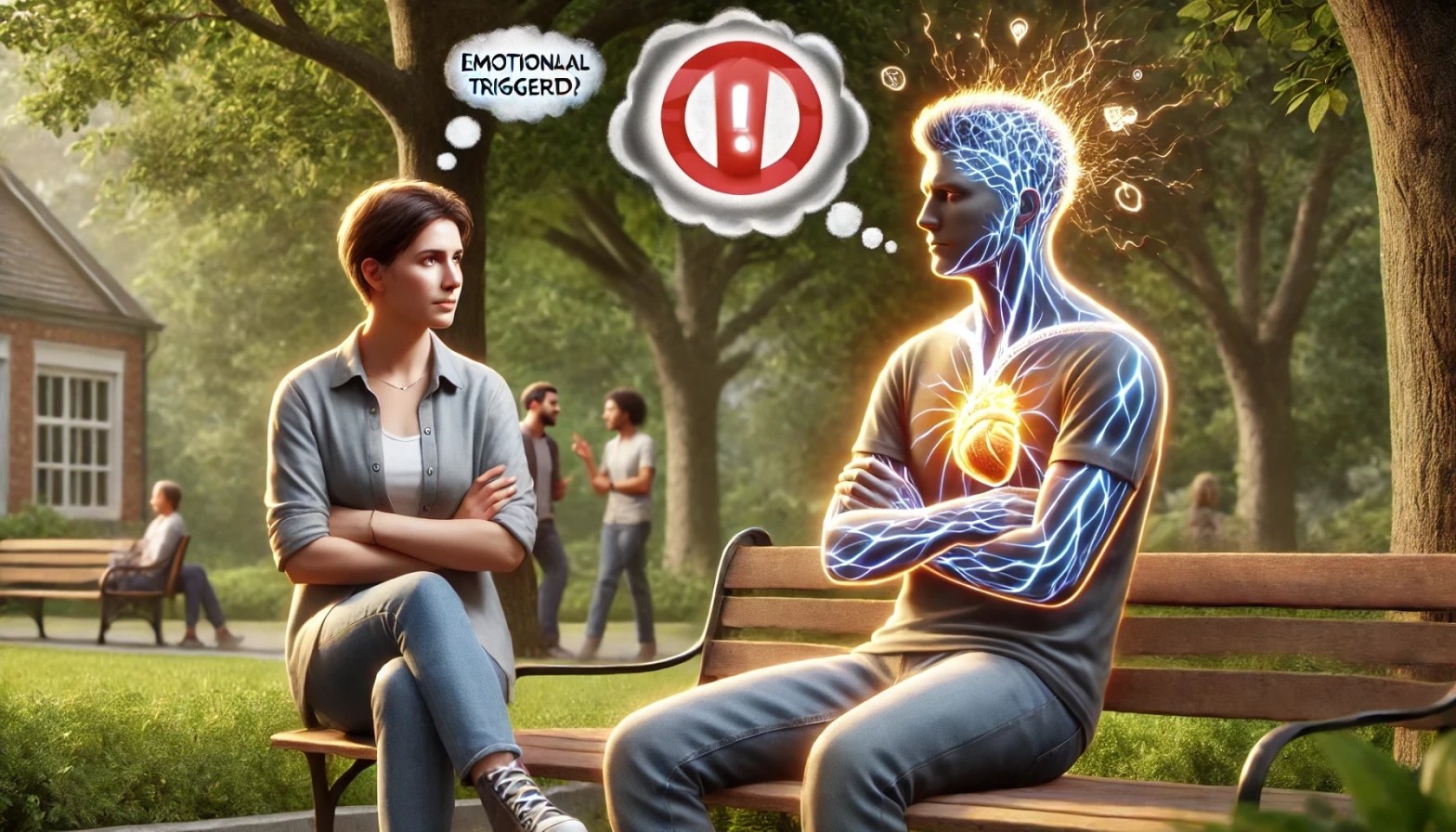
What are Emotional Triggers?
Emotional triggers are events, people, or situations that provoke intense emotional reactions. These triggers are often connected to unresolved past experiences or beliefs. They can be activated by interactions, environments, or sensory experiences like sounds or smells.
For example, hearing a song that reminds you of a painful time can bring back feelings of sadness or anxiety. Similarly, a tone of voice or comment might unconsciously remind you of moments when you felt criticized or misunderstood, causing you to feel defensive or hurt.
Common triggers include:
- Criticism: Feeling attacked or not good enough.
- Rejection: Fear of being dismissed or undervalued.
- Feeling ignored: A sense of invisibility or insignificance.
- Stressful environments: Overwhelmed by excessive demands or chaos.
In intimate relationships, these triggers can be particularly powerful. For me, perceived criticism often activates a defensive reaction. In the moment, it can feel like a direct attack. My thoughts start spiraling, and I experience physical sensations like a heaviness in my chest. I find myself arguing internally about why I’m right and why the situation feels unfair.
Recognizing Emotional Responses
Triggers often lead to automatic emotional responses, shaped by past conditioning and experiences. These responses can typically be categorized into four types:
- Fight: Responding with anger, defensiveness, or confrontation.
- Flight: Withdrawing from the situation emotionally or physically.
- Freeze: Feeling stuck or unable to act.
- Appease: Attempting to pacify others at the expense of your own needs or feelings.
For example, when I feel criticized, my automatic response tends to be defensiveness, which falls under the fight response. I mentally argue with myself about the situation, replaying the moment over and over. I’ve learned, however, that staying in this reactive state only prolongs the discomfort and strains my relationships.
How to Identify Personal Triggers and Patterns
Awareness is the first step in changing automatic reactions. Recognizing personal triggers and patterns helps you develop more conscious responses.
Here are some strategies to increase self-awareness:
- Notice your physical cues: Emotions often manifest in the body before you’re fully aware of them. Pay attention to signs like a racing heart, muscle tension, or a tightness in your chest. These sensations can alert you that a triggered response is occurring.
- Reflect on your thoughts: Observe what thoughts come up when you’re triggered. For me, my thoughts tend to focus on defending my position. I mentally list reasons why the situation is unfair or why the other person is wrong.
- Journal your experiences: After an emotionally charged situation, write down what happened, how you felt, and what thoughts ran through your mind. Over time, patterns may emerge that reveal your key triggers.
- Ask reflective questions:
- “What does this situation remind me of?”
- “Why did I react so strongly?”
- “Have I experienced similar feelings before?”
By reflecting on these questions, I’ve been able to recognize that many of my emotional triggers stem from past experiences, particularly times when I felt misunderstood or devalued. This awareness allows me to respond differently.
The Growth Opportunity in Triggers
Triggers are not just obstacles to overcome—they are signals for growth. They reveal areas where healing and development are needed. For example, if you consistently react defensively to criticism, the underlying issue might be a fear of inadequacy or a lack of self-compassion. By addressing these root causes, you can transform your reactions.
In my case, I’ve learned to disrupt the spiral of defensive thoughts by shifting into curiosity. When I catch myself taking something personally, I ask: “Why does she think that?” or “What’s really going on for her?” Recognizing that others act based on their own past experiences—not as a deliberate attack—helps me move from reaction to understanding. This isn’t always easy, but practices like journaling and visualization help prime me for future situations. I also write down how I want to respond next time, reinforcing my commitment to change.
Conclusion: Turning Awareness into Empowerment
Emotional triggers can influence our thoughts, behaviors, and relationships. However, by identifying and understanding them, we gain control over our responses and break unhealthy cycles.
Developing self-awareness and transforming emotional reactions allows for healthier communication, stronger relationships, and greater emotional resilience.
In the next article, we’ll explore practical techniques for regulating emotions, including mindfulness, grounding exercises, and reframing thoughts.
What emotional triggers have you noticed in your life? How can you use them as signals for growth and self-awareness? Share your thoughts and experiences in the comments.
 Engineer Your Life